Whether you knew this or not, the Almond milk is the most popular plant milk in the States. Its popularity comes from the fact that it is filled with healthy nutrients but it lacks most of the fibres. The most interesting thing is that its health effects aren’t thoroughly examined in any study at all, but some of the obtained components have been studied to a great extent.
What exactly is Almond milk?
Most out there probably consume it to some extent, but I bet most of you do not know what exactly it is. Well, firstly, it is obtained by blending almonds and water, after you strain the mixture in order to remove the solids and get that milky substance. To make it a little more interesting, you can also add butter to the mixture.

The end result is a fine, nutty flavour and creamy texture, almost similar to the regular milk. If you are a bit lazy and unwilling to make this at home (which is pretty easy by the way), you can always find commercial Almond milk in the supermarkets, and you can find it in a variety of brands and flavours (be sure to pick one without added sugars).

As far as health reasons for picking this type of milk are considered, you should know that it has some healthy stuff in it but not as much as the whole almonds. Since it is skinned, blanched and watered down it offers far less nutritious and healthy substances than the whole almond, but despite that here are 7 health benefits you will gain by using this type of milk.
#1 Nutrition
If we compare cow’s milk and almond one, then it should be noted that Almond milk is far less nutritious than the first one, but thanks to the commercialisation of everything, there are some enriched products that come very close. There are some vitamins that Almond milk has (especially vitamin E) and those can be really good for you. This table below shows the differences between these two types of milk in one cup serving, and what they actually contain.
Almond Milk Cow’s Milk
Calories 39 102
Protein 1.55 grams 8.22 grams
Fat 2.88 grams 2.37 grams
Carbs 1.52 grams 12.18 grams
Vitamin 49% of the RDI 0% of the RDI
Thiamin 11% of the RDI 3% of the RDI
Riboflavin 7% of the RDI 27% of the RDI
Magnesium 5% of the RDI 8% of the RDI
You should also know that Almond milk has some minerals that are a little difficult to absorb and this is mostly thanks to the phytic acid, an antinutrient that reduces the absorption of iron, zinc, and magnesium. It should also be noted that thanks to all of this, it is not a suitable milk replacement for infants.
#2 Low calories
Regular almonds are basically 50% fat and it has a high number of calories, but again thanks to commercialisation, it is actually a low-calorie beverage. What this translates to is the fact that you can drink it and not worry about weight gain. As we previously mentioned, this is achieved by diluting it with water in order to get that 1% fat content similar to what you get in cow’s milk. If you decide to make your own Almond milk, then you should know that it might have somewhat more fats in it, of course, depending on how many almonds you add per cup.

#3 It doesn’t raise your blood sugar
When choosing your Almond milk in the stores, try and look for the type that isn’t loaded with sugar. If you manage to find one of those you will get a low-carb beverage, containing only 0.6% carbs (1.5 grams) per cup. Just to compare, low-fat cow’s milk contains 5% carbs, totalling 12 grams in one cup. Since this type of (sugarless) Almond milk is high in fat and protein relative to its carb content, it doesn’t cause a spike in blood sugar levels which is perfect for diabetics, and those of us on a low-carb diet.

#4 Dairy-free
Logically, since it comes from a plant, this type of milk does not contain any of the cow’s milk or other animal products, which is perfect for vegans and lactose intolerant persons. As you know those who are allergic or intolerant to lactose (milk’s sugar) can’t easily digest it and they get “stuck” with excessive gas, bloating, diarrhea and associated discomfort. Thanks to the fact that Almond milk is dairy free it is a great replacement for these types of people.


#5 Strengthens your bones
Dairy milk, as you all know, is loaded with calcium which is beneficial for your bones. Almond milk on the other hand is not, but that is why commercial producers enrich it with calcium, and one cup of this enriched Almond milk can contain up to 45-50% of the RDI. Just to compare, calcium content in one cup of cow’s milk may range from 28-31% of the RDI. Thanks to this fact, enriched Almond milk is very good for your bones (reduces the risk of osteoporosis), especially since it now has more calcium per serving than regular dairy milk.


#6 Reduces the risks of hearth diseases
Thanks to the high amount of vitamin E, regular consumption of nuts is linked to a reduced risk of heart disease, according to an observatory study. Thanks to the fact that Almond milk is 1% oil by weight, around 90% of which is unsaturated. Oleic acid, the main fatty acid in almond oil, gives you a lot of beneficial changes in blood lipids, which eventually lead to reduced risk of heart disease. According to one of the studies, if you consume 66 grams of almonds or almond oil every day for six weeks reduced their levels of “bad” LDL cholesterol by 6% and triglycerides by 14%, as well as increased their “good” HDL cholesterol by 6%. Vitamin E, which almonds are loaded with, helps here as well. Thanks to its ability to protect lipids against oxidation it reduces the levels of oxidized LDL cholesterol (risk factor for heart disease).

#7 Vitamin D
We have mentioned enriched Almond milk with loads of calcium just before, but it is also important to stated that there is an enriched type of Almond milk that contains higher levels of vitamin D. This vitamin is important in your daily diet, since there is a lot of us out there that are low or even deficient in vitamin D. This leads to very brittle bones, fatigue and weak muscles. Enriched vitamin D Almond milk gives you (per one cup) around 101 IU (2.4 µg) of vitamin D, which is 25% of the RDI. Cow’s milk is also very often enriched with this vitamin, and per one cup, it has similar amounts of it.

Conclusion
Almond milk is very good for your health, and it can easily replace regular dairy milk. As you’ve already read there are some benefits from it, and some very important ones. If you reconsider to add Almond milk to your daily diet, then know that it is widely available in supermarkets, but you should also reconsider making some at home. Since it is easy to make there is no sense buying something commercial and uncontrolled by you directly.

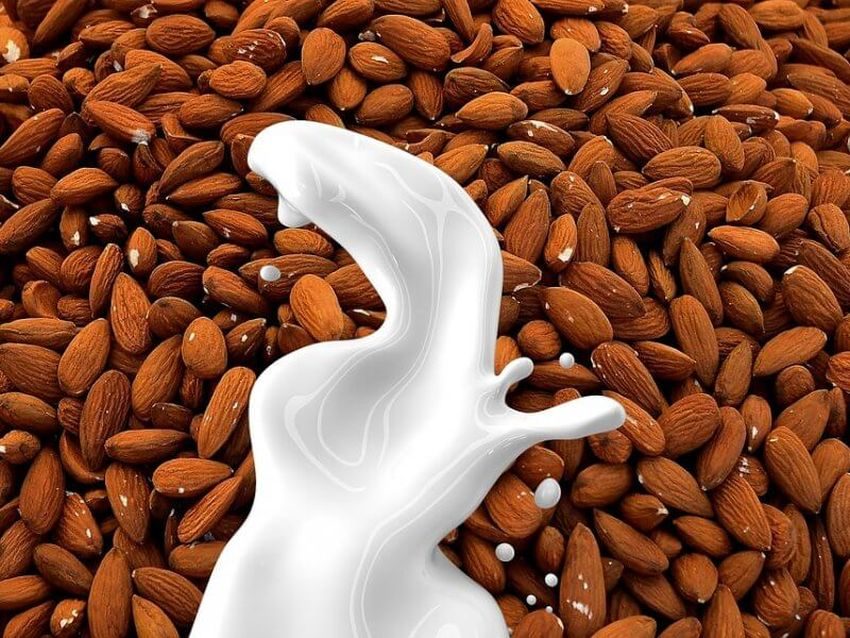
There are few things you need to make it in the comfort of your kitchen – a blender, water, and a cup of almonds. Next step is to skin the almonds (do this by soaking them in water for 8-12 h), put the almonds in a blender with four cups of water and mix until smooth. Last step is to strain the mixture in order to get that silky smooth milky texture. Done! Enjoy the fruits of your labour.